

Horizontal directional drilling (HDD) produces drilling mud, a slurry of water, bentonite clay or other additives, and cuttings, which has to be contained and removed as the bore advances. Hydrovac and vacuum trucks collect that slurry at the entry and exit pits, keep the site workable, and haul the mud away for proper disposal.
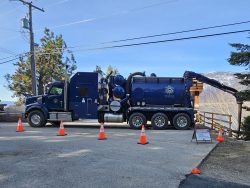
What drilling mud is
Drilling mud, also called drilling fluid, is pumped through the drill to cool and lubricate the bit and carry cuttings back out of the hole. Most drilling mud is water-based. On an HDD job, the mud travels along the bore and comes back up at the entry and exit pits, mixed with the soil and rock the drill has cut.
Drilling mud also does two jobs that keep the bore open:
- Keeping water from water-bearing layers out of the borehole
- Keeping unstable ground from collapsing into the borehole
Why HDD slurry has to be removed
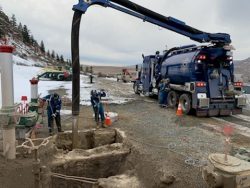
As a bore advances, slurry builds up in the pits. Left alone, it floods the work area, slows the crew and can run off the site. It has to be collected as the job goes and taken to a facility that can accept it.
How hydrovac and vacuum trucks help
Hydrovac and vacuum trucks collect slurry at the entry and exit pits throughout the bore, so the site stays clean and workable and the drill crew can keep going. Our hydrovac trucks can also expose any utilities along the bore path before drilling starts.
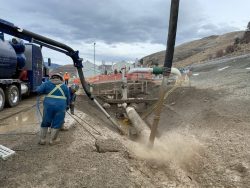
Hydro excavation is widely used around pipelines and buried infrastructure because it’s safe, reliable and non-destructive. The same trucks that daylight a line can keep the drilling site under control.
HDD slurry cleanup in the Okanagan and across BC
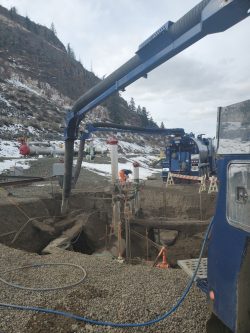
We keep our trucks clean of residue between jobs, and safety comes first on every site. Slurry is hauled to a facility that accepts it, with environmental waste manifests where the material requires them. From our base in Kelowna, D&L Environmental takes hydrovac and vacuum truck work across British Columbia.
See our hydrovac truck services and vacuum truck services, request a quote or call 250-765-0999.
Frequently asked questions
Drilling fluid mixed with the soil and rock the drill cuts through. It is pumped through the bore and comes back up at the pits, where it has to be collected.
It is hauled to a facility that accepts it, with environmental waste manifests where the material requires them.
Yes. We take hydrovac and vacuum truck work across British Columbia.