

Hydrovac daylighting exposes buried utilities so crews can see their exact location, depth and condition before they dig, drill or install anything nearby. It uses pressurized water and a vacuum instead of a bucket, so it’s much faster than hand digging and far less likely to strike a line. Request locates through BC 1 Call first; daylighting then confirms what the locate marks show.
Why daylight at all?
Locate marks tell you roughly where a line runs. They don’t tell you exactly how deep it is, whether it has shifted, or whether there’s an unmarked line beside it. Striking a gas line, a power cable or a fibre bundle can injure people, shut down service to a neighbourhood and stop a project for days. Daylighting replaces that uncertainty with a line you can see and measure.
Step 1: Plan the work
Start with where you’ll dig, how deep you’ll go and what equipment you’ll use. That tells you which lines you need to see and where your daylight holes should go: at every crossing, at changes in direction, and anywhere your work comes close to a marked line.
Step 2: Request locates through BC 1 Call
Before any ground disturbance, submit a locate request through BC 1 Call so the owners of buried lines can mark them or tell you they’re clear. Allow time for the owners to respond; check BC 1 Call for current notice requirements. Lines that belong to the property owner, such as a service line from a house to a shop, may not be located by the utility, so you may also need a private locator.
Step 3: Read the marks and the owners’ instructions
Locate marks are colour-coded paint, flags or stakes that show the type and approximate position of each line. Many owners also set requirements for exposing their lines, such as hand or hydrovac exposure within a set distance of the mark. Read the locate responses carefully and follow each owner’s instructions.
Step 4: Daylight the lines
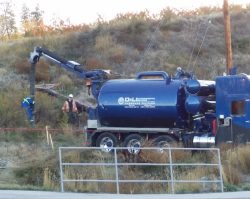
The hydrovac operator cuts the soil with pressurized water from a hand-held wand, and the vacuum lifts the loosened soil and water into the truck’s debris tank as it goes. The hole stays small and controlled, and because nothing hard touches the line, the chance of damaging it is far lower than with a bucket or a shovel. In winter, heated water cuts through frozen ground.
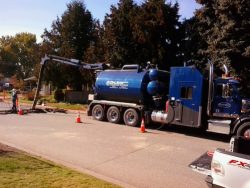
Our trucks carry the vacuum hose on a boom and can run up to 200 feet of remote hose, so crews can daylight in landscaped yards, behind buildings and in other spots the truck can’t reach.
Step 5: Confirm and record
- Measure the depth of each line and note its position relative to the locate mark
- Photograph the exposed line with a tape or reference in view
- Mark the confirmed location clearly for the crew that follows
- Protect or barricade open holes so they’re safe until the work is done
If a line isn’t where the marks say, or you find one that wasn’t marked, stop and contact the owner or the locate service before you go further.
Step 6: Do the work, then backfill
With the lines confirmed, your crew can dig, drill or install with confidence. When the work is done, backfill the daylight holes as the facility owner or the project specifications require. Small, clean holes mean less restoration than a machine excavation.
Why hydrovac is the right tool for daylighting
- Speed: much faster than hand digging, especially in clay and rocky soil
- Safety: water and vacuum don’t cut pipes or cables the way metal teeth can
- Precision: small, accurate holes with little disturbance to the surrounding ground
- Clean sites: the slurry goes straight into the truck instead of piling up beside the hole
- Year-round: heated water keeps work moving in frozen ground
Hydrovac daylighting from D&L Environmental
D&L Environmental has more than 35 years of hydrovac and vacuum truck experience. Our fleet includes newer hydrovac trucks with 10-inch booms, large blowers and remote hose capability. Our crews hold ground disturbance and confined space training, and we’re COR certified, an ISNetworld member and ComplyWorks verified. Our primary area runs from Kamloops and Merritt through the Okanagan, and we take hydrovac work across British Columbia, with 24/7 emergency response. Read more in our guide to hydrovac excavation and how we keep digging in winter.
To book daylighting, see our hydrovac truck services, request a quote or call 250-765-0999.
Frequently asked questions
Yes. Both terms describe exposing a buried utility in a small, controlled hole so it can be seen.
Yes. Locates show roughly where lines are; daylighting confirms exactly where they are and how deep.
Yes. Heated water cuts through frozen ground.
It depends on how many lines cross or run near your work, the owners’ requirements and what you’re installing. Send us the locate responses and your plans, and we’ll help you work it out.